Curling seams and bubbles often mean the wallpaper adhesive has lost its grip. Sometimes the cause is age or poor installation. In other cases, moisture is reaching the paper or wall. At Jeff Schultz Painting, our wallpaper removal in Sarasota, FL, service helps homeowners remove failed wallcoverings and prepare the surface for a fresh interior finish.
Before pressing a seam back into place, look at where the damage started and whether it is spreading. A lasting solution begins with the cause, especially in Sarasota homes exposed to humid air, heavy summer rain, and year-round air conditioning.
Why Wallpaper Seams Curl or Bubble
Wallpaper curls or bubbles when the bond between the paper, adhesive, and wall becomes weak. The pattern and location of the damage can help narrow the likely reason.
Humidity and Indoor Moisture
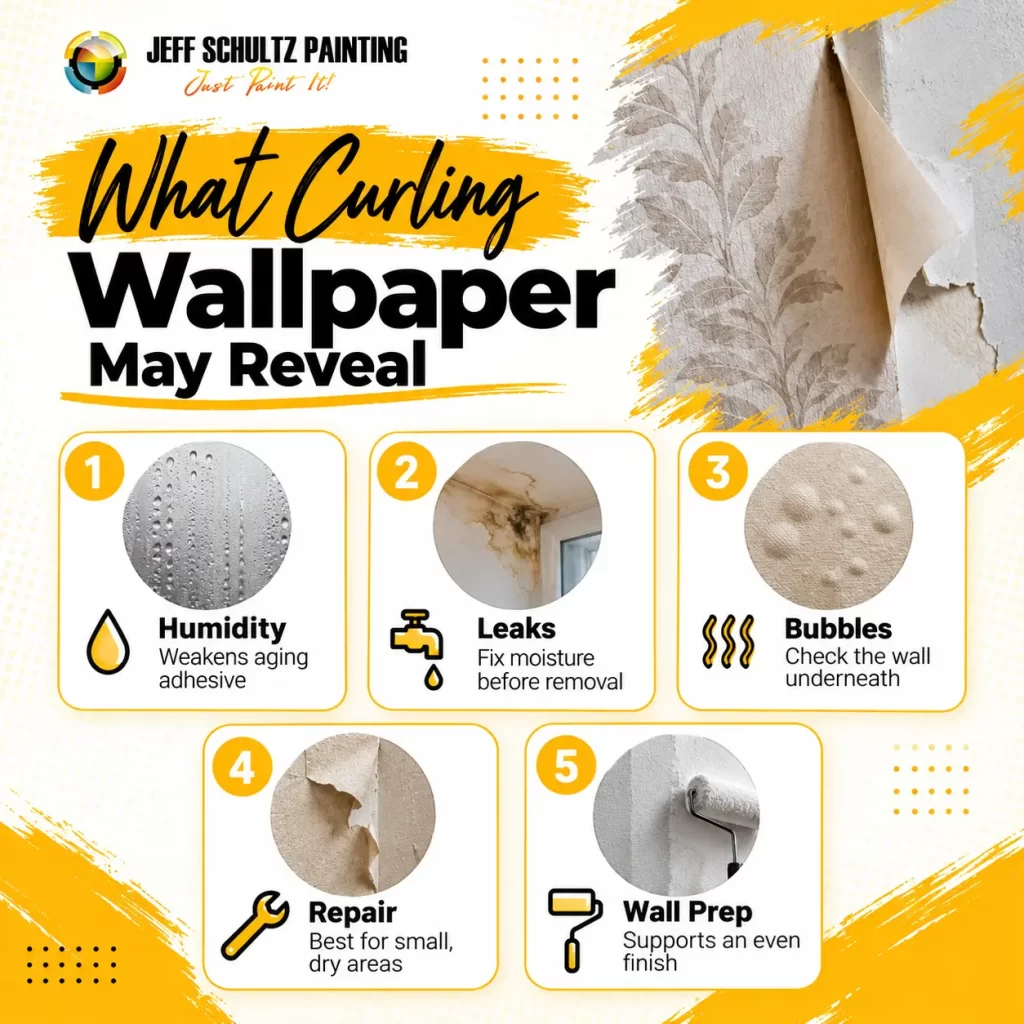
Warm, damp air can soften some adhesives and encourage paper edges to lift. Bathrooms, kitchens, laundry rooms, and exterior-facing walls often experience the largest swings in moisture. In Sarasota’s wet season, indoor humidity can also rise when ventilation or air-conditioning controls cannot keep pace.
A bubble near a plumbing fixture, window, ceiling line, or exterior wall deserves closer attention. Wallpaper moisture damage may follow a leak, condensation, or damp drywall. Reattaching the paper before correcting that condition can trap the problem and lead to more failure.
Adhesive and Surface Problems
Not every loose seam comes from active moisture. Too little adhesive, uneven application, dust, glossy paint, or residue on the wall can prevent a strong bond. Paper may also shrink slightly as it dries, which can pull two seams apart.
Age matters as well. Adhesive can become brittle, and repeated temperature changes may loosen areas that once looked secure. Bubbling wallpaper soon after installation points more strongly toward trapped air, insufficient smoothing, or poor wall preparation.
What the Damage Can Reveal
The damaged area can show whether you are dealing with a small bond failure or a broader wall concern. Check the paper, the surrounding wall, and the room conditions before deciding what to do.
Signs of Surface-Only Failure
A dry, firm wall with one clean lifted edge may have a simple adhesive problem. The paper should not feel soft, stained, or brittle. There should also be no musty odor or repeated growth around the damaged area.
Small bubbles that have remained unchanged may contain trapped air. However, several new bubbles, widening seams, or repeated failure after repair suggest the bond is breaking down across a larger section.
Signs to Check for Hidden Moisture
Stains, softened drywall, peeling paint, dampness, or a musty smell call for a moisture check before wallpaper work begins. The Florida Department of Health guidance on mold and moisture explains that leaks, condensation, and poorly vented kitchen or bathroom moisture can support indoor mold growth.
Do not cover or seal a wall that is still wet. A plumber, roofer, HVAC technician, or other qualified professional may need to correct the source first. Once the area is dry and sound, the wallcovering decision becomes much clearer.
Repair or Remove the Wallpaper?
A repair may be reasonable for one dry, intact seam, but widespread or moisture-related failure usually calls for removal. The wall condition and your plans for the room should guide the choice.
When a Small Repair May Hold
A small repair is most promising when the paper is clean, flexible, and securely bonded around the loose spot. The wall underneath should be dry, stable, and free of residue or damage. The pattern must also align without stretching or tearing.
Avoid adding excess paste or forcing a swollen area flat. Too much product can stain the face, squeeze through the seam, or create another raised spot. A careful assessment protects both the wallpaper and the surface below.
When Removal Is the Better Choice
Removal makes more sense when seams are failing throughout the room, bubbles keep returning, or the paper is stained and brittle. It is also the better route when you want smooth painted walls. Painting over loose wallpaper does not correct a weak bond, and raised edges can remain visible through the new coating.
Homeowners who plan to remove wallpaper before painting should expect more than peeling paper away. Remaining adhesive, torn drywall facing, holes, and uneven texture all need attention before primer and paint.
What Happens After Wallpaper Removal
After removal, the wall must be cleaned, repaired, dried, and primed as its condition requires.
Adhesive Cleanup and Wall Repairs
Wallpaper often leaves paste behind, even when the paper releases easily. That residue can interfere with primer, create rough patches, or react with water-based coatings. The wall should be cleaned without oversaturating drywall and then allowed to dry.
Removal may expose torn paper facing, dents, old patches, or hairline cracks. At Jeff Schultz Painting, we assess those conditions before moving ahead. Our broader Sarasota painting services include interior work that depends on careful surface preparation.
Priming Before Interior Painting
Primer helps create an even surface and limits problems from repaired areas or remaining stains. The right product depends on the wall material, its condition, and what was uncovered during removal. Primer should go onto a clean, dry, stable surface.
Finish choices also matter in bright Gulf Coast homes. Side light from large windows can reveal ridges and patchwork that were easy to miss earlier. You can review our completed painting projects when considering the look you want for the room.
Takeaways
Curling wallpaper seams and bubbles are signs that the paper has lost a sound bond somewhere. A small, dry edge may be repairable, while widespread lifting, stains, softness, or recurring bubbles justify a closer wall and moisture check.
For Sarasota homes, humidity, condensation, and wet-season leaks should be ruled out before cosmetic work begins. Correct the source, remove failed material when needed, and prepare the wall carefully before applying a new finish.
Frequently Asked Questions
Can bubbling wallpaper be repaired?
Yes, a small wallpaper bubble may be repairable when the surrounding paper and wall are dry and stable. Recurring, widespread, or stained bubbles may signal broader adhesive failure or moisture that should be addressed first.
Does humidity make wallpaper seams curl?
Yes, high indoor humidity can weaken some wallpaper bonds and contribute to curling seams. Ventilation, steady air conditioning, and correction of leaks or condensation can help protect the wall before any repair.
Should I remove wallpaper before painting?
Yes, removal is usually the better choice when wallpaper is loose, bubbling, textured, or damaged. Painting over an unstable covering can leave visible seams and allow the new finish to fail with the paper below it.
What is behind a wallpaper bubble?
A wallpaper bubble may contain trapped air, excess adhesive, or a spot where the paper did not bond. If the area feels damp, soft, stained, or musty, check for moisture before opening or flattening it.
How long does professional wallpaper removal take?
Professional wallpaper removal time depends on the room size, paper type, adhesive, wall condition, and number of layers. An inspection helps define the scope because cleanup and repairs can take longer than the initial stripping.
Schedule Wallpaper Removal for Your Sarasota Home
Jeff Schultz Painting can assess failed wallpaper, remove it, and prepare the wall for your next interior finish. For wallpaper removal in Sarasota, FL, call us at (941) 374-3672 or visit our shop at 5310 Southerly Way, Sarasota, FL 34232. You can also request a painting estimate for your wallpaper removal and wall preparation project.